Billfish Species Overview
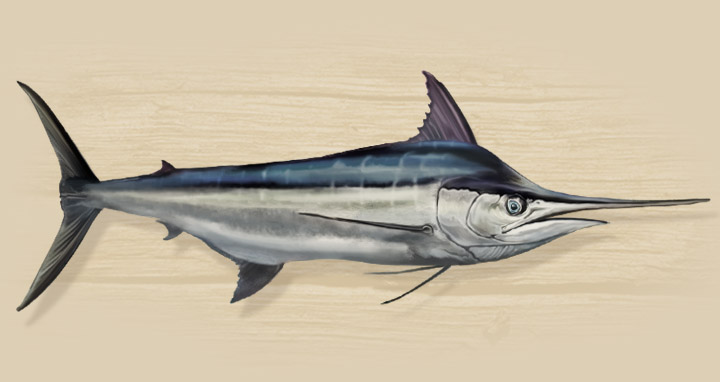
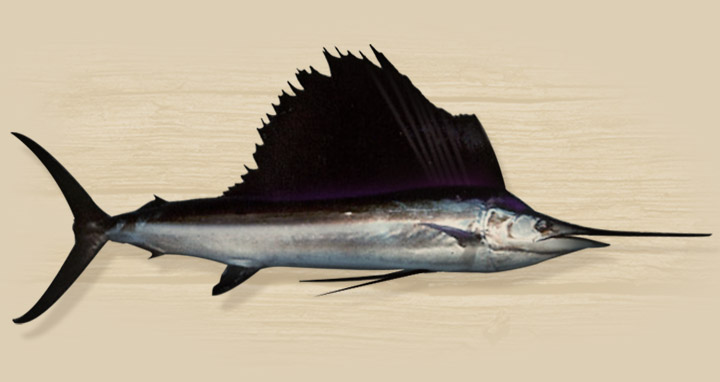
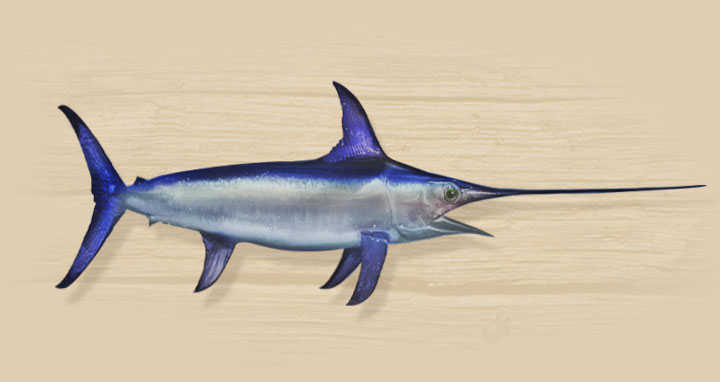
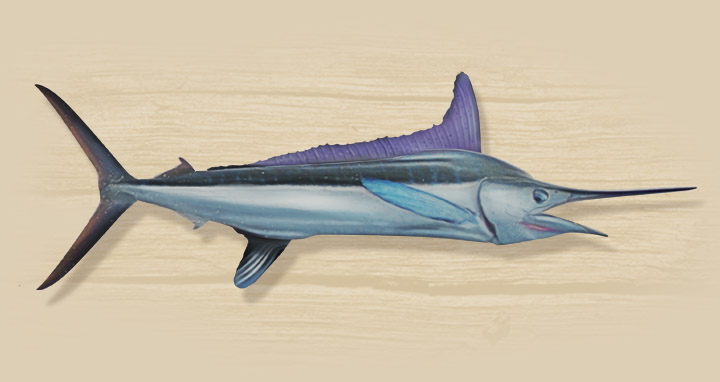
The term billfish is used to describe a group of pelagic or open-water fish that have a “bill” or extended rostrum. In Louisiana this group consists of blue marlin, white marlin, sailfish and swordfish. All species of billfish are highly sought after by sport fishermen and they drive a large portion of the economic impact of sport fishing. Swordfish are not only sought after recreationally but are also subject to a commercial fishery as they have been historically harvested for food. All other billfish species are protected from sale in the U.S. and a catch and release culture is heavily established with most anglers. Recreational anglers can retain billfish of certain sizes within the current regulations, but most anglers would rather release billfish to catch them again another day. Anglers no longer need to kill a billfish for trophy mounts, as most fish are fiberglass replicas.
The thrill of catching a billfish comes from its strength and acrobatic display, which is unequaled in the fishing world. Trolling lures or rigged bait is the most prevalent way to fish for and catch billfish, though dead bait for swordfish is a standard practice. Billfish are caught on many different types of tackle depending on location, depth, and angler preference. Louisiana is home to many billfish that feed on a variety of other offshore species like tuna and dolphin.
Louisiana Billfish Species
Related Rules and Regulations
All recreational anglers, including those not normally required to have a fishing license, and charter captains must obtain a Recreational Offshore Landing Permit to possess swordfish.
Recreational fishing vessels shall not possess more than five swordfish per vessel per trip. Swordfish taken under a recreational bag limit shall not be sold, purchased, exchanged, bartered, or attempted to be sold, purchased, exchanged or bartered. No person aboard any vessel shall transfer or cause the transfer of swordfish between vessels on state or federal waters.
All recreational anglers, including those not normally required to have a fishing license, and charter captains must obtain a Recreational Offshore Landing Permit to possess billfish.
A HMS Permit is required for all owners/ operator of vessels in the Gulf of Mexico fishing for and/or retaining the HMS regulated species of tunas, billfishes, swordfish and sharks. The Atlantic HMS Permits will be valid from the date of issuance through the end of the calendar year. The permit fee is $25.
An Atlantic HMS Charter/Headboat Permit is required for all charter or headboat fishing for and/or retaining regulated Atlantic HMS in federal waters of the Gulf of Mexico. The HMS Charter/Headboat Permit will be valid from the date of issuance through through the end of the calendar year. The permit fee is $20.
For information about contact the National Marine Fisheries Service (NMFS) Permitting Office at 1-888-872-8862 or 727-824-5399 or visit the NMFS Permit Shop at www.hmspermits.noaa.gov. For complete HMS regulations, contact the HMS Management Division at 301-713- 2347 or visit the website at www.nmfs.noaa.gov/sfa/hms/information.