White Marlin(Tetrapturus albidus)
Quick Facts
- Size Range: The white marlin can reach weights over 150 pounds, but the most commonly caught size is 40 to 70 pounds.
- Native Species?: Yes
- Food Value: The white marlin is fair, but anglers generally catch and release them, like most billfish.
State Record
- Louisiana State Record: 134lbs
- State Record Date: 7/1/1976
- State Record Holder Dennis L. Good
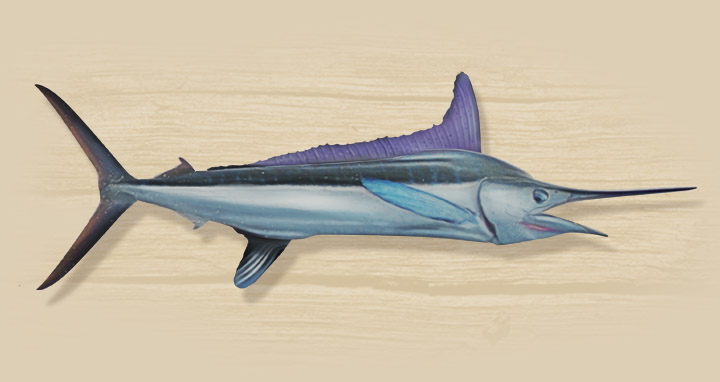
The white marlin is dark blue to brown on the back and silvery white on the belly and sides. It has spots on its dorsal fin. The most noticeable characteristic is the rounded tips of its dorsal and pectoral fins. The jaw is elongated and forms a bill.
The white marlin is an offshore fish and prefers blue water. They are found in temperate and tropical waters of the Atlantic and Gulf of Mexico.
Trolling lures and natural baits are the main focus of anglers targeting white marlin, though live bait will catch them as well. They are known for their quick and erratic movement in your spread of baits. They are tricky to hook up and can make an experienced angler feel sheepish.
White Marlin Rules and Regulations
| Size Limit : | 66” min lower jaw fork length |
| Seasons : | Finfish |
All recreational anglers, including those not normally required to have a fishing license, and charter captains must obtain a Recreational Offshore Landing Permit to possess billfish.
There are Currently No Videos to Display
Related Fishing Methods
Live Bait
Live bait is a term given to many different types of fish, crustaceans, insects and worms that are popular food items for fish and used by fishermen for bait. There are many benefits to live bait as well as a few cons. The pros normally out weigh the negatives, and live bait is widely used. The biggest benefit for fishermen is that they are using the real thing and often puts a fish's guard down. Small fish, crabs, shrimp, clams, crickets and the good ole earthworm are all used to entice a fish to the hook. The only negatives to live bait is just that, keeping it alive. Sometimes catching it can be a challenge, as only some species can be bought as live bait. No matter how you get it, live bait is a great way to target many types of fish.
Trolling
Trolling is the presentation of lure and/or baits from a moving boat. Many types of predatory fish are caught this way in both fresh and salt water. Speeds and presentations vary greatly depending on the target species. One may troll a small beetle spin for crappie with trolling motor in the lake, or charge around oil rigs at 15 knots with a high-speed wahoo spread. Trolling ballyhoo offshore is one of the most common, broad spectrum ways to catch all types of gamefish. Again there are many different methods to choose from.