Spanish Mackerel(Scomberomorus maculatus)
Quick Facts
- Size Range: They grow to about 10 pounds.
- Native Species?: Yes
- Food Value: Fair eating when fresh and are heavily caught by commercial fishermen.
State Record
- Louisiana State Record: 10.56lbs
- State Record Date: 8/1/1972
- State Record Holder Mike LeBlanc
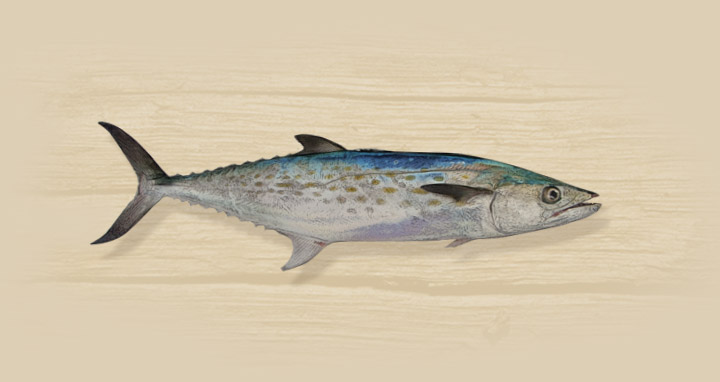
Spanish mackerel are a slender, smooth skinned fish with sharp teeth and forked tail. Yellow spots along the upper half of its silver body and black color in the dorsal fin help distinguish them from other mackerels.
They live in coastal waters from the surf to 100 feet. These fish travel in large schools and often jump out of the water when feeding on small fish.
Small flashy jigs, diamond jigs and small spoons work well for these speedy fish. Light wire leader is recommended if live bait is used. Trolling and casting will entice bites from these speedy predators.
Spanish Mackerel Rules and Regulations
| Size Limit : | 12” min fork length |
| Bag and Possession Limit : | 15 daily per person |
| Seasons : | Finfish |
There are Currently No Videos to Display
Related Fishing Methods
Jigging
A versatile method of fishing for many types of fish in both freshwater and salt. A jig is a lure, normally a lead-headed lure with many various types of body/tail configurations made of rubber, hair and feather. Jigs are one of the most versatile of all lures and can be tipped with bait or not. Traditionally jigs are worked in variety of up and down motions, and can be fished throughout the entire water column, depending on the fishery. A modern form of jigs called metal jigs has taken hold and many varieties and shapes have been developed to work different ways. Made famous by the Shimano Butterfly Jig and now produced by many companies in many variations. If I could only have one lure to fish with it would be a jig.
Live Bait
Live bait is a term given to many different types of fish, crustaceans, insects and worms that are popular food items for fish and used by fishermen for bait. There are many benefits to live bait as well as a few cons. The pros normally out weigh the negatives, and live bait is widely used. The biggest benefit for fishermen is that they are using the real thing and often puts a fish's guard down. Small fish, crabs, shrimp, clams, crickets and the good ole earthworm are all used to entice a fish to the hook. The only negatives to live bait is just that, keeping it alive. Sometimes catching it can be a challenge, as only some species can be bought as live bait. No matter how you get it, live bait is a great way to target many types of fish.
Trolling
Trolling is the presentation of lure and/or baits from a moving boat. Many types of predatory fish are caught this way in both fresh and salt water. Speeds and presentations vary greatly depending on the target species. One may troll a small beetle spin for crappie with trolling motor in the lake, or charge around oil rigs at 15 knots with a high-speed wahoo spread. Trolling ballyhoo offshore is one of the most common, broad spectrum ways to catch all types of gamefish. Again there are many different methods to choose from.