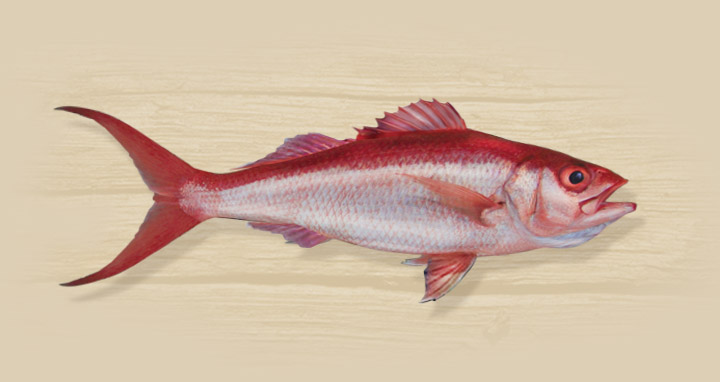
Queen Snapper(Etelis oculatus)
Quick Facts
- Size Range: Up to 25 pounds
- Native Species?: Yes
- Food Value: Excellent eating, mild, white delicate flesh.
Queen snapper are bright red snapper with large red eyes and an elongated tail fin. Their body shape is more elongated than many other species of snapper.
They are found in deep waters, normally over 800 feet to 1,800 feet. They congregate around structures like ledges and drop-offs. They’re found in the tropical Atlantic and Gulf of Mexico.
Deep-dropping with cut bait or squid, with lighted, multiple hook rigs and a large weight is the most practical way to catch them. Normally anglers use electric reels due to the amount of line required to reach these depths. Lights seem to attract the queen snapper to the bait, but the light source must be able to withstand the great pressure at these depths.
Queen Snapper Rules and Regulations
Non-charter recreational anglers and charter captains must obtain a Recreational Offshore Landing Permit to posses snapper.
There are Currently No Videos to Display
Related Fishing Methods
Bottom Fishing
Bottom fishing is normally about fishing bottom structures in order to target benthic or bottom dwelling fish. There are a wide variety of techniques, but the common element is the targeting of species who dwell around or hide in natural and man-made structures. Fish like grouper, snapper, amberjack and catfish would be considered bottom fish. It is very popular amongst anglers and success is often determined by the fishermen's ability to crank a fish away from the structure before the fish can duck into it and cut the line. Anchoring or drifting the boat over the structure is key to having success. There are many versions, and many of the bottom fish are prized eating.
Dead Bait
Dead bait consists of many different types of bait that is no longer alive. Dead bait is still attractive to many fish as they are normally feeding by smell and dead bait is the ticket for smell. Fresh cut fish, dead shrimp, half crab, shucked clam, cut squid and all popular examples of bait that will catch a wide variety of fish. Many sport fish that are predators, will gladly take the opportunity to slurp up a fresh dead bait. A redfish is equally happy to chase down a baitfish or slurp up a dead shrimp on the bottom. Dead bait has the benefit is being easy to obtain, maintain and transport, as opposed to live bait which takes livewells, quality water control and can be harder to obtain.