Greater Amberjack(Seriola dumerili)
Quick Facts
- Other Names: Reef donkey
- Size Range: The amberjack grows over 100 pounds and is very common in the 30 to 60 pound range.
- Native Species?: Yes
- Food Value: The edibility is good, but care must be taken to remove the white, stringy parasitic worms that are common in the flesh, especially near the tail end of the fish. Despite that fact, it is a good eating fish and that should not be a deterrent as the worms are obvious and do not harm humans.
State Record
- Louisiana State Record: 139lbs
- State Record Date: 5/1/2009
- State Record Holder Bill Weldon
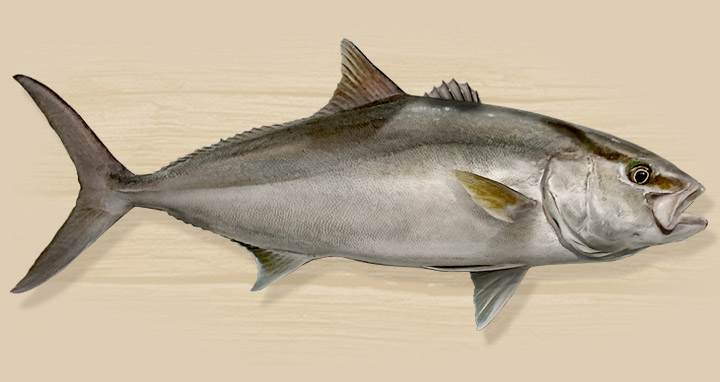
An elongate but heavy bodied member of the jack family, amberjack have silver sides with an amber brown back and a large head and eyes. They have large mouths and an appetite to match. A forked tail powers this brute, which will give anglers a run for their money.
Adult amberjack live in offshore waters around man-made and natural structures. They swim throughout oilrigs and are very commonly caught while anglers are fishing for grouper and snapper.
Live bait and jigs are the most common methods used to target these aggressive and superhard-fighting fish. They require stout tackle and a strong back. They want to swim straight down and will make multiple runs during a fight. They are known as being back breakers, but the challenge is fun.
Greater Amberjack Rules and Regulations
| Size Limit : | 30” min fork length |
| Bag and Possession Limit : | One daily per person |
| Seasons : | Finfish |
All recreational anglers, including those not normally required to have a fishing license, and charter captains must obtain a Recreational Offshore Landing Permit to possess amberjack.
A closed season for the recreational harvest of greater amberjack has been established from June 1 - July 31 of each year.
There are Currently No Videos to Display
Related Fishing Methods
Bottom Fishing
Bottom fishing is normally about fishing bottom structures in order to target benthic or bottom dwelling fish. There are a wide variety of techniques, but the common element is the targeting of species who dwell around or hide in natural and man-made structures. Fish like grouper, snapper, amberjack and catfish would be considered bottom fish. It is very popular amongst anglers and success is often determined by the fishermen's ability to crank a fish away from the structure before the fish can duck into it and cut the line. Anchoring or drifting the boat over the structure is key to having success. There are many versions, and many of the bottom fish are prized eating.
Deep Jigging
Deep jigging is a method of fishing using heavy lead head jigs with rubber or hair for tails. They are often tipped with a strip of fish or squid and dropped to the depths. A series of vertical bounces entices a fish into striking the lure. Grouper, snapper and amberjacks are often caught with this method. It is a workout, but worth it when it all comes tight. Metal jigs in combinations with braided line, have gained a prominent place in the tackle box of most fishermen working the depths.
Drift Fishing
Drift fishing can encompass a variety of fishing methods. Bottom fishing over structure is often done while drifting. Timing the drop of your baits as you pass by the structures below is the trick. Also knowing when you have drifted beyond the fish is a key element to being succesful. Anglers also drift while live bait fishing and chunking for bluewater pelagic fish like tuna. The use of live bait or chunks is a slower presentation where the fish are drawn to the boat by smell or vibration of live fish. Inshore you can drift along while casting for trout and redfish with baits or lures. One of the main benefits of drift fishing is that you can quietly cover ground while searching for feeding fish.
Jigging
A versatile method of fishing for many types of fish in both freshwater and salt. A jig is a lure, normally a lead-headed lure with many various types of body/tail configurations made of rubber, hair and feather. Jigs are one of the most versatile of all lures and can be tipped with bait or not. Traditionally jigs are worked in variety of up and down motions, and can be fished throughout the entire water column, depending on the fishery. A modern form of jigs called metal jigs has taken hold and many varieties and shapes have been developed to work different ways. Made famous by the Shimano Butterfly Jig and now produced by many companies in many variations. If I could only have one lure to fish with it would be a jig.
Live Bait
Live bait is a term given to many different types of fish, crustaceans, insects and worms that are popular food items for fish and used by fishermen for bait. There are many benefits to live bait as well as a few cons. The pros normally out weigh the negatives, and live bait is widely used. The biggest benefit for fishermen is that they are using the real thing and often puts a fish's guard down. Small fish, crabs, shrimp, clams, crickets and the good ole earthworm are all used to entice a fish to the hook. The only negatives to live bait is just that, keeping it alive. Sometimes catching it can be a challenge, as only some species can be bought as live bait. No matter how you get it, live bait is a great way to target many types of fish.
Vertical Jigging
Vertical jigging popular and growing trend of using a variety of metal jigs and high speed reels to quickly drop and retrieve the jig making it dance or flutter through the water column. It is deadly on a wide variety of fish. Both bottom fish and pelagics are fooled into biting these versatile jigs.