Almaco Jack(Seriola rivoliana)
Quick Facts
- Size Range: Up to 50 pounds
- Native Species?: Yes
- Food Value: The almaco jack has a very edible, firm white meat and tends to be less wormy than the greater amberjack.
State Record
- Louisiana State Record: 50.62lbs
- State Record Date: 7/1/2005
- State Record Holder Joe Hanson
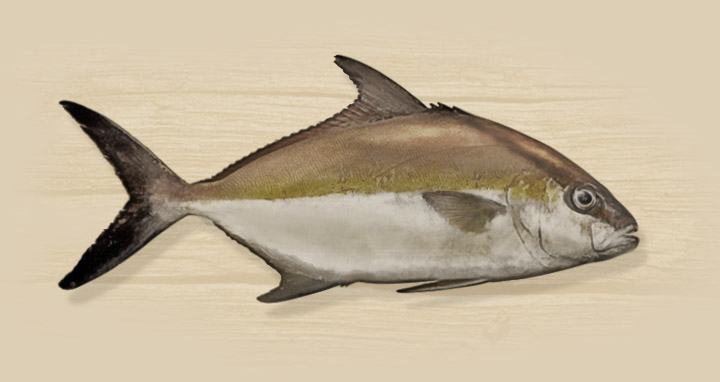
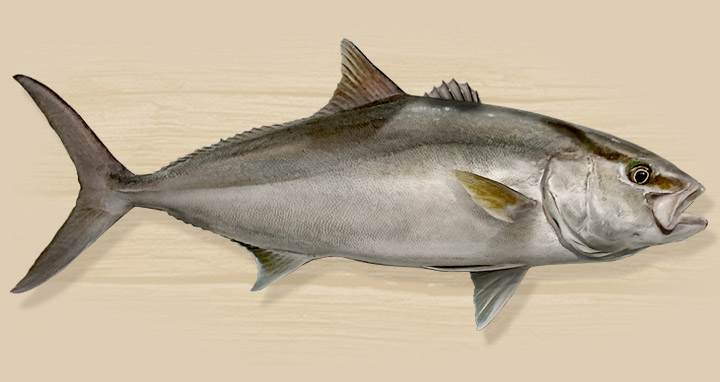
The almaco is similar to the greater amberjack but has a deeper body and more pointed dorsal and anal fins. They are also slightly more flattened and often have the dark bar through the eye. They are mostly brown in the body but with a lighter belly.
Young almaco jacks are frequently caught around sargassum weed and adults are found schooling on a wide range of offshore structures such as oilrigs and reefs. They are often found with greater amberjack, which prefer similar habitats.
Live bait and vertical jigs will be the most effective for these aggressive fighters. They will take dead bait occasionally. They are very strong for their size and often amaze anglers with their fighting ability.
Almaco Jack Rules and Regulations
| Seasons : | Finfish |
There are Currently No Videos to Display
Related Fishing Methods
Bottom Fishing
Bottom fishing is normally about fishing bottom structures in order to target benthic or bottom dwelling fish. There are a wide variety of techniques, but the common element is the targeting of species who dwell around or hide in natural and man-made structures. Fish like grouper, snapper, amberjack and catfish would be considered bottom fish. It is very popular amongst anglers and success is often determined by the fishermen's ability to crank a fish away from the structure before the fish can duck into it and cut the line. Anchoring or drifting the boat over the structure is key to having success. There are many versions, and many of the bottom fish are prized eating.
Jigging
A versatile method of fishing for many types of fish in both freshwater and salt. A jig is a lure, normally a lead-headed lure with many various types of body/tail configurations made of rubber, hair and feather. Jigs are one of the most versatile of all lures and can be tipped with bait or not. Traditionally jigs are worked in variety of up and down motions, and can be fished throughout the entire water column, depending on the fishery. A modern form of jigs called metal jigs has taken hold and many varieties and shapes have been developed to work different ways. Made famous by the Shimano Butterfly Jig and now produced by many companies in many variations. If I could only have one lure to fish with it would be a jig.
Live Bait
Live bait is a term given to many different types of fish, crustaceans, insects and worms that are popular food items for fish and used by fishermen for bait. There are many benefits to live bait as well as a few cons. The pros normally out weigh the negatives, and live bait is widely used. The biggest benefit for fishermen is that they are using the real thing and often puts a fish's guard down. Small fish, crabs, shrimp, clams, crickets and the good ole earthworm are all used to entice a fish to the hook. The only negatives to live bait is just that, keeping it alive. Sometimes catching it can be a challenge, as only some species can be bought as live bait. No matter how you get it, live bait is a great way to target many types of fish.